

Rising energy prices mean UK businesses are looking for ways to cut costs and improve efficiency. One of the most effective steps is carrying out a business energy audit. An audit helps identify how energy is being used, where waste is occurring, and what actions can reduce consumption and costs.
What is a business energy audit?
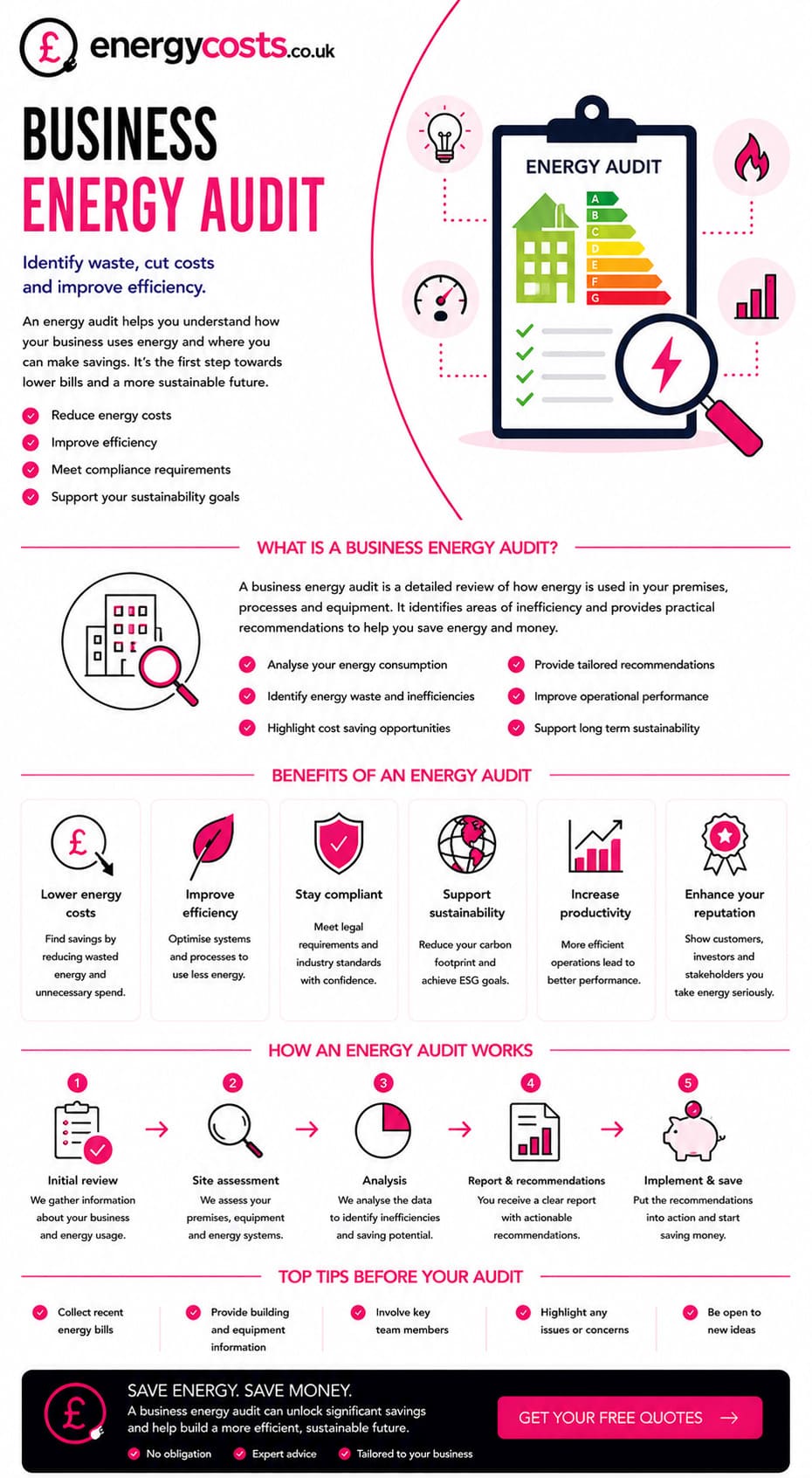
A business energy audit is a systematic review of how a company consumes energy. It examines everything from lighting and heating to equipment and staff behaviour.
The aim is to highlight inefficiencies and provide recommendations to save money, reduce carbon emissions, and improve sustainability.
Why should businesses carry out an energy audit?
- Cost savings – audits often reveal quick wins, such as switching to LED lighting or adjusting thermostat settings.
- Compliance and reporting – audits may help with regulatory requirements such as the Energy Savings Opportunity Scheme (ESOS).
- Sustainability – reducing consumption lowers carbon emissions, which supports ESG goals and strengthens brand reputation.
- Strategic planning – insights from audits help businesses forecast energy budgets more accurately.
How to do a business energy audit
- Gather data
Collect recent energy bills, meter readings, and any available consumption reports. This establishes your baseline usage.
- Inspect premises and equipment
Check heating, ventilation, air conditioning (HVAC), lighting, machinery, and IT equipment. Look for inefficient systems, poor maintenance, or outdated technology.
- Identify usage patterns
Note when energy demand peaks during the day. This helps highlight behaviours (e.g., equipment left running out of hours) that may be driving up costs.
- Engage staff
Talk to employees about how they use equipment and spaces. Staff input often uncovers waste you might overlook.
- Prioritise improvements
List possible efficiency measures and rank them by cost, ease, and potential savings. Examples include:
Switching to energy-efficient lighting
Installing smart meters
Servicing boilers and HVAC systems
Improving insulation
Encouraging behavioural changes - Implement changes
Introduce quick, low-cost actions first, then plan for longer-term investments such as solar panels or heat pumps.
- Monitor and review
Track consumption after changes are made. A follow-up review ensures savings are achieved and highlights further opportunities.
Should I use a professional auditor?
Small businesses can conduct simple audits themselves, but professional auditors provide a more detailed analysis, often with specialist tools such as thermal imaging and sub-metering. While there’s a cost involved, professional audits frequently pay for themselves through the savings identified.
Final verdict: Business energy audit guide
A business energy audit is one of the most effective tools for reducing overheads and improving sustainability. Whether carried out in-house or with professional support, an audit provides clear insights into where money is being wasted and how to fix it. For most UK businesses, the savings easily outweigh the effort.
FAQ
Most businesses benefit from carrying out an audit every 2–3 years, or sooner if energy costs rise sharply, new equipment is installed, or the business expands into new premises.
A simple in-house audit may take a few hours, while a professional audit of larger premises could take several days, depending on the size of the site and level of detail required.
Costs vary, but small business audits typically range from £500 to £2,000. Larger or more complex sites may pay more, though many businesses recoup this through the savings identified.
Yes. Many SMEs conduct basic audits by reviewing bills, checking equipment, and identifying waste. However, professional audits provide deeper insights, specialist testing, and tailored recommendations.
An energy audit is voluntary and aimed at cutting costs and improving efficiency. An ESOS assessment is a legal requirement for large UK businesses that meet specific thresholds under the Energy Savings Opportunity Scheme.
In most workplaces, the biggest “silent” wastes are heating and cooling running when they don’t need to (poor controls, doors/windows left open, inefficient HVAC), lighting left on in low-use areas, and equipment left on out of hours (PCs, printers, vending, kitchen kit). An audit highlights these patterns so you can prioritise quick wins first.
Yes — smart meters (and, for larger sites, sub-metering) make audits more accurate by showing when consumption spikes and whether usage continues overnight or at weekends. That visibility helps you link energy use to specific behaviours, processes, or kit, then verify whether changes (like new controls or shutdown routines) are actually reducing consumption.
A good action plan should list recommendations grouped by priority and payback: quick, low-cost fixes (lighting settings, timers, draught proofing), medium-term upgrades (controls, insulation, servicing/maintenance), and longer-term investments (renewables, major equipment replacement). It should also name an owner, set deadlines, estimate costs/savings, and include a monitoring step to track results.