Coffee shops and cafés use energy for espresso machines, ovens, refrigeration, dishwashers, water heating, ventilation, lighting, and customer comfort systems such as air conditioning and heating.
Many operate long hours, often seven days a week, with high consumption during morning and lunchtime periods.
Understanding monthly energy cost helps coffee shop and café owners manage overheads, choose suitable business energy tariffs, and improve profit margins.
Typical coffee shop energy usage
Energy use varies based on premises size, food service type, equipment (such as combi ovens or dishwashers), and whether the café offers hot kitchen services or operates more as a beverage-led venue.
Typical monthly energy usage ranges
| Business type | Electricity (kWh/month) | Gas (kWh/month) |
|---|---|---|
| Small coffee shop (drinks-focused) | 1,800–3,500 | 100–500 |
| Medium café (light food service, bakery items) | 3,600–6,500 | 800–2,200 |
| Large café or coffee shop with kitchen and seating | 7,000–12,000+ | 3,000–6,000+ |
Small coffee shops tend to use electric espresso machines, grinders, refrigeration and lighting, with minimal gas use. Food-focused cafés using gas ovens, water heaters, and hot kitchens see much higher gas consumption.
Monthly energy cost estimates for a coffee shop
A medium-sized café or coffee shop with food preparation facilities and seating typically spends between £1,185 and £2,385 per month on combined electricity and gas. Costs vary based on equipment type, footfall, menu offering and operating hours.
| Business size | Electricity cost | Gas cost | Total monthly energy cost |
|---|---|---|---|
| Small | £500–£975 | £30–£75 | £530–£1,050 |
| Medium | £975–£1,755 | £210–£630 | £1,185–£2,385 |
| Large | £1,820–£3,120+ | £810–£1,530+ | £2,630–£4,650+ |
These cost estimates include standing charges and reflect typical tariff rates. Businesses with air conditioning, high footfall or full kitchens tend to be at the upper end of these ranges.
Typical unit rates and standing charges used in our coffee shop cost examples
To make the monthly cost ranges on this page easier to interpret, the estimates use typical UK fixed-rate business tariff pricing for cafés and coffee shops. Coffee shops are often electricity-heavy (espresso machines, refrigeration and dishwashers), while gas costs rise where there’s a hot kitchen, ovens, or high hot-water demand.
Electricity pricing assumptions (coffee shops)
- Electricity unit rate: ~26p/kWh is used in the example calculations on this page.
- Electricity standing charge: typically assumed at ~45p to 70p per day for many small business contracts (varies by region, meter type and supplier).
Gas pricing assumptions (coffee shops)
- Gas unit rate: typically assumed at ~6.5p to 8.2p/kWh for many small-to-medium business contracts (with smaller users often higher, and larger users sometimes lower).
- Gas standing charge: typically assumed at ~27p to 45p per day, depending on meter setup, region and supplier.
Important note on real-world variation
Coffee shop quotes can vary materially based on opening hours, seating area heating/cooling, refrigeration load, whether you run a hot kitchen, equipment efficiency, and contract length/renewal timing. The figures above are included to show the assumptions behind the cost ranges, rather than represent guaranteed market rates.
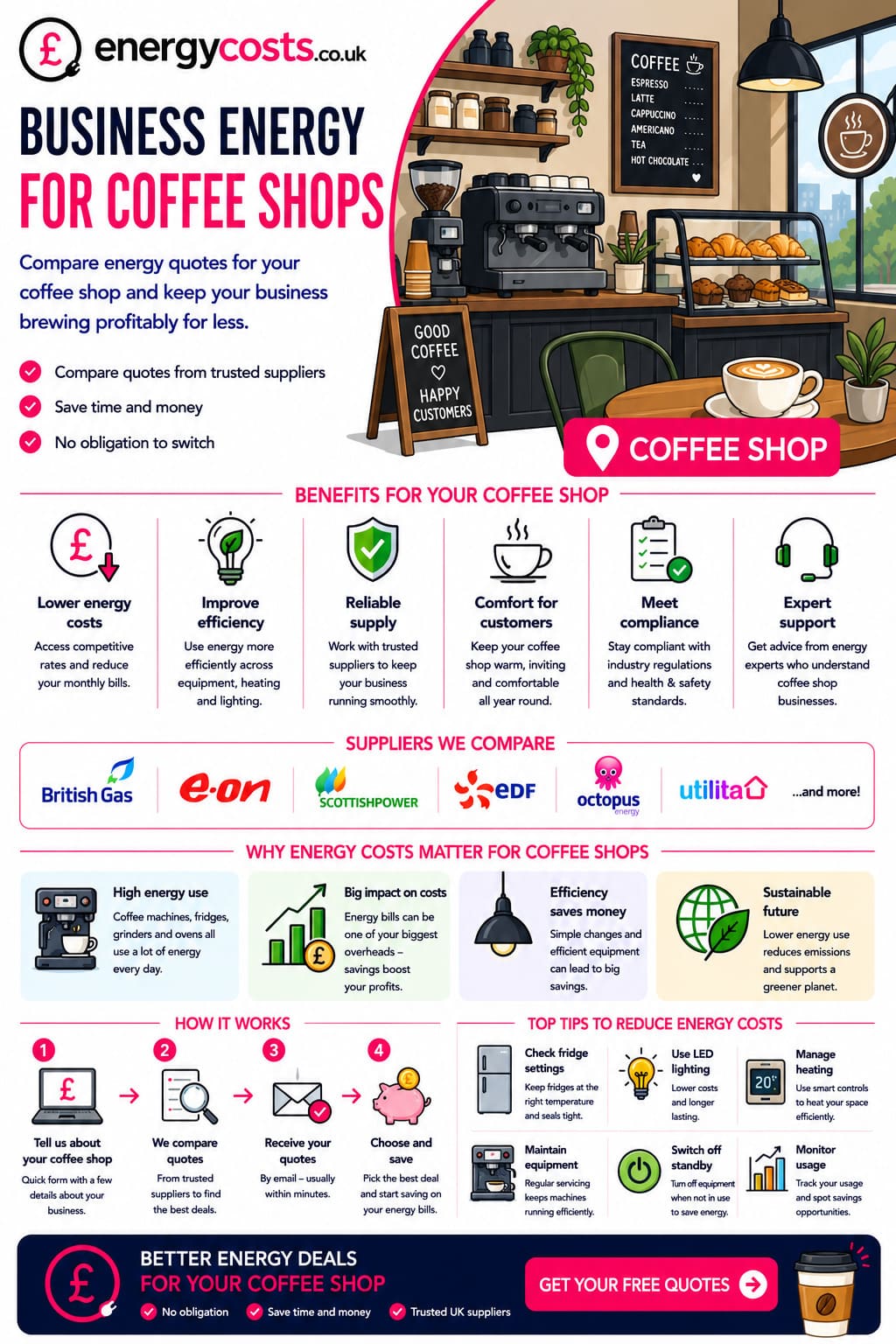
Which café equipment uses the most energy?
| Equipment or activity | Electricity (kWh/month) | Gas (kWh/month) |
|---|---|---|
| Espresso machines and grinders | 350–900 | N/A |
| Refrigeration, chillers and display fridges | 400–1,600 | N/A |
| Commercial dishwashers and glasswashers | 300–1,000 | 100–300 |
| Ovens, combi ovens and grills | 200–700 | 1,000–4,500 |
| Hot water boilers | 100–450 | 800–2,500 |
| Lighting, heating, ventilation and air con | 300–1,100 | 1,000–2,000 |
| Hot display units and warming cabinets | 200–800 | N/A |
Espresso machines, refrigeration and heating systems run for most of the day, making them major contributors to energy use.
Key factors affecting café energy costs
- Operating hours: Businesses opening early mornings and operating into late evenings can consume up to 35% more energy than daytime-only cafés.
- Kitchen intensity: Adding cooked meals, hot sandwiches or bakery services significantly increases gas and electricity usage.
- Customer footfall and seating areas: Heating and cooling large seating areas increases energy usage, especially in winter and peak summer.
- Equipment efficiency: Older espresso machines, combi ovens, and display fridges consume up to 25% more energy than newer, high-efficiency models.
Energy-saving strategies for coffee shops
| Strategy | Saving potential | Notes |
|---|---|---|
| Upgrade refrigeration to A-rated models | 15–30% | Fridge display cabinets often run 24 hours |
| Use timing controls on espresso machines | 10–15% | Machines left on all day waste energy |
| Switch to LED lighting and smart systems | 8–12% | Especially effective in seating areas |
| Install heat recovery ventilation | 10–18% | Reduces heating costs in winter |
| Insulate hot water pipes and boilers | 7–10% | Prevents heat loss |
| Use fixed or seasonal energy tariffs | 8–12% | Protects against peak energy pricing |
Why energy matters in cafés
Energy accounts for between 6% and 14% of monthly operating costs in coffee shops and cafés, rising to over 18% for food-focused premises.
High refrigeration demand, heating requirements and long operating hours make energy one of the largest variable expenses.
Energy tariff options for café businesses
Cafés benefit from switching to fixed-rate business tariffs, dual fuel plans and time-of-use tariffs that match early morning usage patterns. Some suppliers offer hospitality-specific contracts with tailored unit rates for high daytime consumption.
Save money on your coffee shop energy bills with EnergyCosts.co.uk
Whether you run a small coffee shop or a full-service café with kitchen facilities, accurate energy budgeting and tariff selection can improve profitability. Use EnergyCosts.co.uk to compare business energy suppliers offering bespoke rates for hospitality and food-service businesses.
FAQ
A medium-sized café or coffee shop with food preparation facilities and seating typically spends between £1,185 and £2,385 per month on combined electricity and gas. Costs vary based on equipment type, footfall, menu offering and operating hours.
A small drinks-focused coffee shop typically uses between 1,800 and 3,500 kWh of electricity each month. This includes espresso machines, grinders, refrigerators, lighting and dishwashers. At 26p per kWh, this equates to around £500 to £975 per month, excluding standing charges.
Most cafés spend far more on electricity because espresso machines, chillers, display fridges, dishwashers and lighting run continuously. Gas use is higher in cafés with hot kitchens, ovens or large water boilers, but drink-led venues normally rely more on electricity.
Espresso machines, refrigeration units and dishwashers are among the biggest electricity users. Gas ovens, boilers and kitchen extraction systems consume the most gas. Display fridges and coffee machines often run for up to 14 hours per day.
Yes. Indoor seating areas need heating and air conditioning, which can add 20% to 35% to total monthly energy usage. Lighting, hot water and general appliance use also increase when customers dine in.
Yes. Installing LED lighting, using smart timers on coffee machines, insulating hot water pipes, cleaning fridge seals and improving ventilation control can reduce energy usage by 10% to 18% without replacing major appliances.
Refrigeration typically accounts for 20% to 30% of electricity usage in cafés due to 24-hour operation of drink coolers, milk storage, display fridges and dessert cabinets. Using A-rated appliances and maintaining seals can lower costs significantly.
Yes. Fixed business tariffs help cafés save 8% to 12% annually by protecting against price rises and providing predictable costs. Time-of-use tariffs are useful for businesses with early-morning demand or lower evening usage.
Cafés operating 12 to 14 hours a day typically consume 30% to 40% more energy than those with standard business hours. Coffee machines, refrigeration and heating are usually kept on for extended periods, pushing monthly costs up on your business energy bill.
Energy normally accounts for 6% to 14% of operating costs in coffee shops, and up to 18% in cafés with full kitchens. This percentage is highest in winter and for premises with large seating or extensive refrigeration.