

Running a gym is energy-intensive. With long opening hours, heating and cooling requirements, and electricity-hungry equipment, energy costs make up a significant part of overheads.
Understanding what to expect each month helps gym owners budget effectively and identify savings opportunities. How much does energy cost per month for a gym business?
What drives energy use in gyms?
- Cardio and strength equipment – treadmills, cross-trainers, and rowing machines consume large amounts of electricity.
- Heating, ventilation, and air conditioning (HVAC) – maintaining a comfortable environment is essential but costly.
- Lighting – gyms require bright lighting across large spaces, often for 12–18 hours a day.
- Showers and hot water – high usage of showers and water heaters adds to gas and electricity bills.
- Entertainment systems – TVs, sound systems, and Wi-Fi networks also contribute to consumption.
Typical monthly energy costs for a gym
Energy use varies depending on the size, location, and facilities offered, but industry data suggests:
| Gym type | Average electricity use | Average gas use | Estimated monthly cost* |
|---|---|---|---|
| Small gym/studio (100–200 members) | 5,000–7,500 kWh | 2,000–3,000 kWh | £1,500–£2,000 |
| Medium gym (500–800 members) | 12,000–18,000 kWh | 5,000–7,000 kWh | £3,500–£5,000 |
| Large gym/fitness centre (1,000+ members, pool/sauna) | 25,000–40,000 kWh | 12,000–20,000 kWh | £8,000–£12,000 |
*Estimates based on 2026 UK average business energy rates: 30p per kWh for electricity and 10p per kWh for gas, plus standing charges.
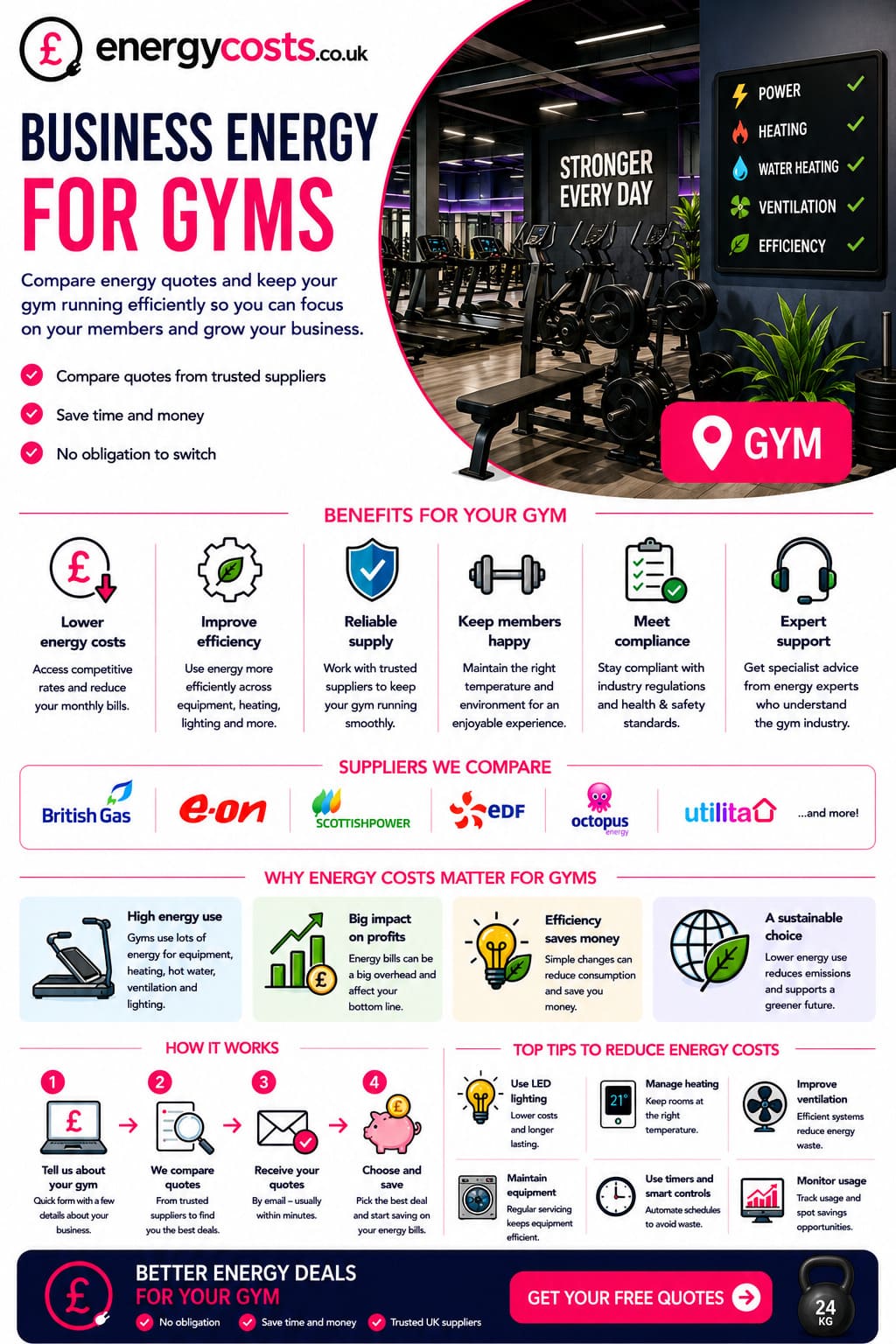
Typical unit rates and standing charges used in our gym cost examples
To make the monthly cost ranges on this page easier to interpret, the estimates use 2026 UK average business energy rates for gyms, with standing charges added on top. Gyms are often electricity-heavy (lighting, HVAC, cardio equipment), with gas mainly driven by space heating and hot water (especially showers).
Electricity pricing assumptions (gyms)
- Electricity unit rate: typically around 30p/kWh.
- Electricity standing charge: standing charges vary by supplier, region and meter setup, but typical fixed-rate SME ranges are around 45p to 70p per day (higher for micro supplies in some cases).
Gas pricing assumptions (gyms)
- Gas unit rate: typically around 10p/kWh.
- Gas standing charge: typical fixed-rate SME ranges in early 2026 were around 22p to 35p per day (again, higher for some micro supplies).
Important note on real-world variation
Actual gym energy quotes can vary materially based on opening hours (including 24/7 operation), HVAC/cooling intensity, presence of pools/saunas/spas, shower and hot water demand, building insulation, and renewal timing. The figures above are included to show the assumptions behind the cost ranges, rather than represent guaranteed market rates.
Factors that influence monthly bills
- Opening hours – 24/7 gyms have significantly higher usage than standard 12-hour operations.
- Facilities – pools, saunas, and spas dramatically increase heating costs.
- Building efficiency – older, poorly insulated gyms will use more heating and cooling energy.
- Equipment efficiency – modern cardio machines are more energy-efficient than older models.
How gyms can reduce energy bills
- Upgrade to LED lighting with motion sensors in less-used areas.
- Install smart meters to track and manage consumption.
- Maintain HVAC systems regularly for peak efficiency.
- Consider renewable options such as solar panels for long-term savings.
- Encourage staff and members to adopt energy-conscious behaviours (e.g., limiting shower times).
For more, see: how to reduce business energy bills.
Final verdict
On average, UK gyms can expect to spend anywhere between £1,500 and £12,000 per month on energy, depending on their size and facilities. With careful monitoring, investment in efficiency, and smart contract choices, gyms can keep these essential costs under control while maintaining a comfortable environment for members.
FAQ: How much does energy cost per month for a gym business?
Gyms use large amounts of electricity for cardio equipment, lighting, and entertainment systems. Heating, ventilation, air conditioning, and hot water for showers also add significantly to monthly bills.
It depends on the facilities. Cardio equipment and lighting drive high electricity use, while heating, hot water, and pools typically push gas consumption higher. Larger gyms with pools often spend more on gas.
For most gyms, heating and cooling are the largest costs, followed closely by cardio equipment. In gyms with pools, water heating is usually the single biggest contributor to energy bills.
Upgrading to LED lighting, maintaining HVAC systems, and installing efficient equipment can cut gym energy bills by 15–25%. Renewable options like solar panels may reduce long-term costs even further.
Yes. Simple steps like installing timers, turning off unused machines, reducing shower flow, and adjusting thermostat settings can make noticeable savings without expensive upgrades.

1 thought on “How much does energy cost per month for a gym business?”
Comments are closed.